Reviewing existing workflow
User Shadowing
How might we design the vendor operations dashboard to reduce cognitive load, enabling efficient task completion and decision-making, so users can focus on high-impact tasks rather than repetitive actions?
Explore opportunities to leverage automation, advanced analytics and AI to streamline the vendor management operations.
Balancing Automation and AI: Understanding which tasks could be fully automated versus which needed AI assistance or manual review.
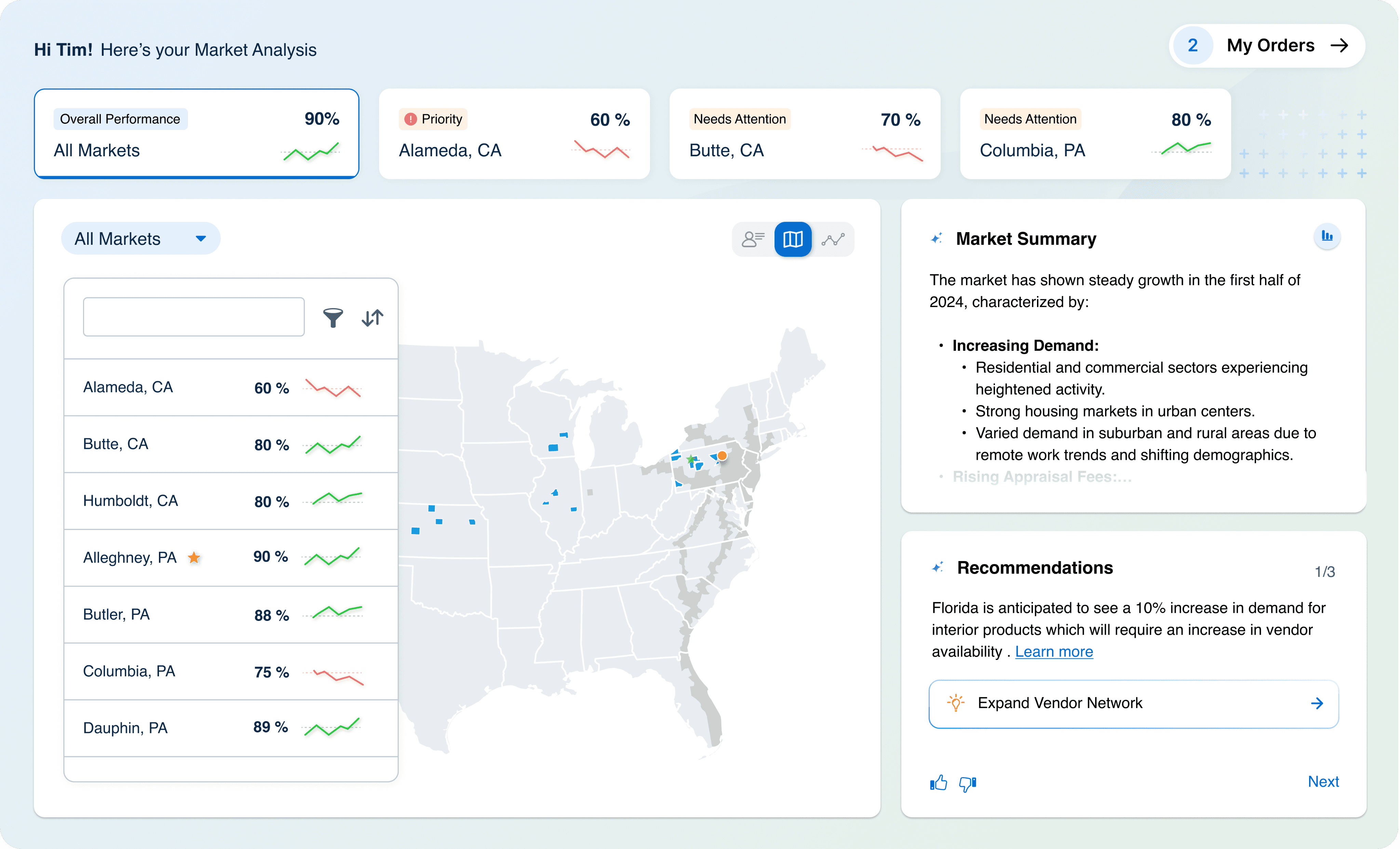
Market Health Metrics: Defining what constitutes a "good" or "bad" market, based on factors like turn time, appraiser availability, and quality metrics.
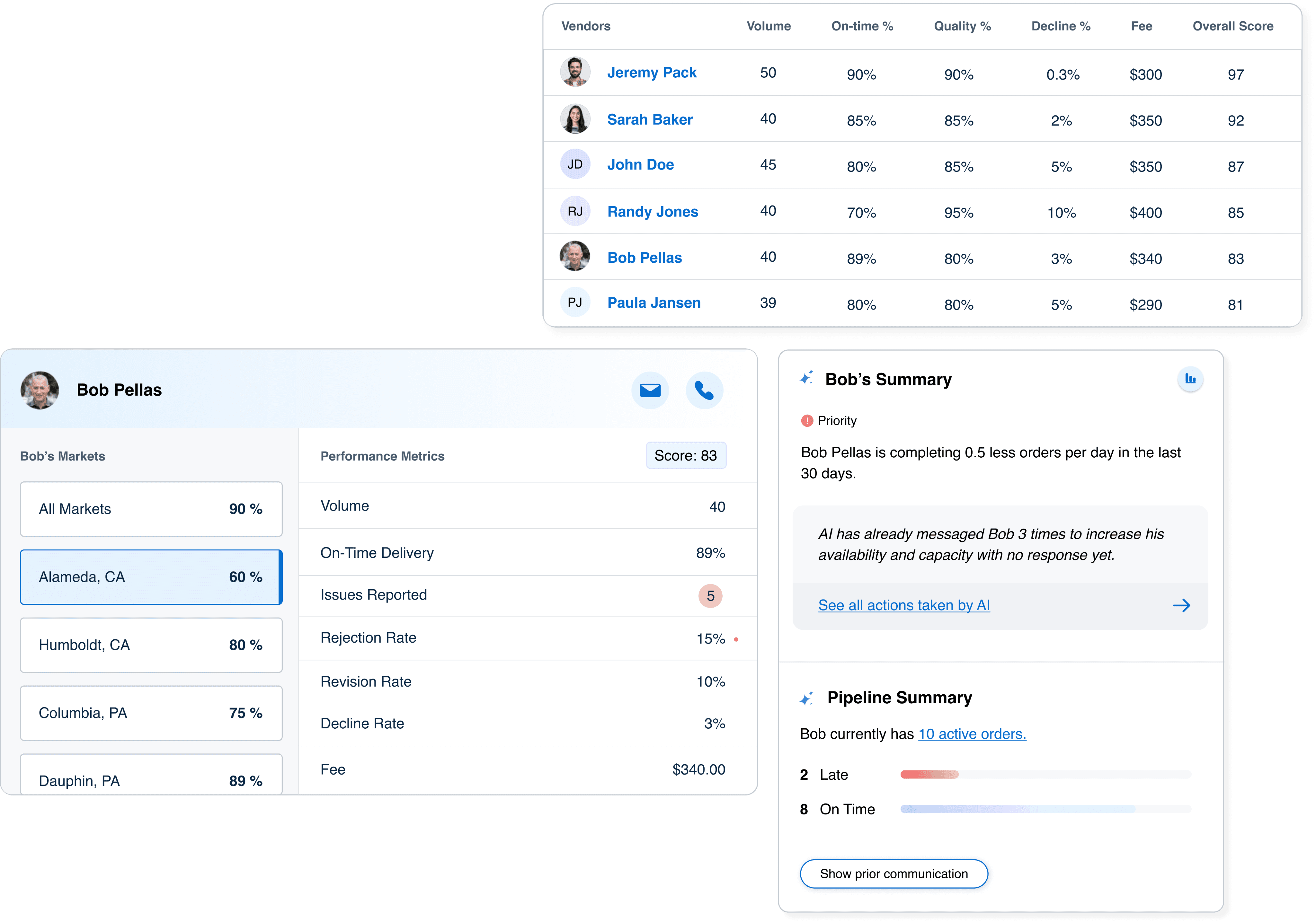
Vendor Performance Metrics: Identifying and tracking key performance indicators (KPIs) for vendors that impact overall market health.
Real-Time Decision Making: Equipping managers with the ability to quickly analyze both market and vendor performance and take action with minimal friction.
60% reduction in manual tasks.
50% less time taken to resolve a task.
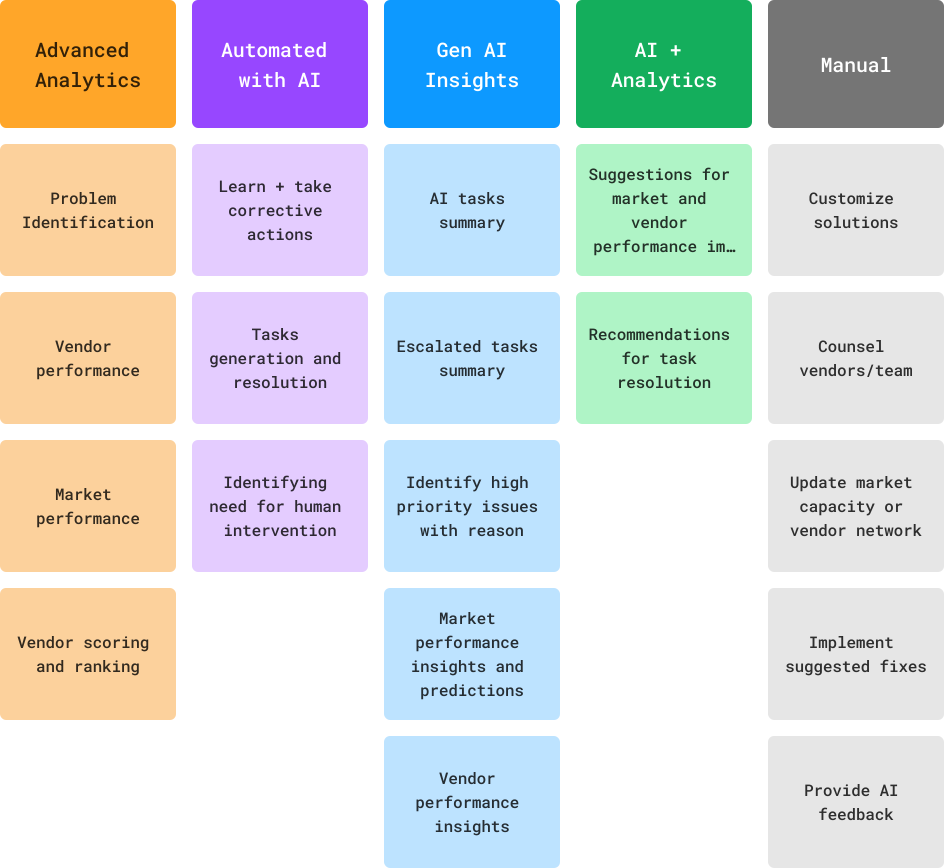
Feature Breakdown
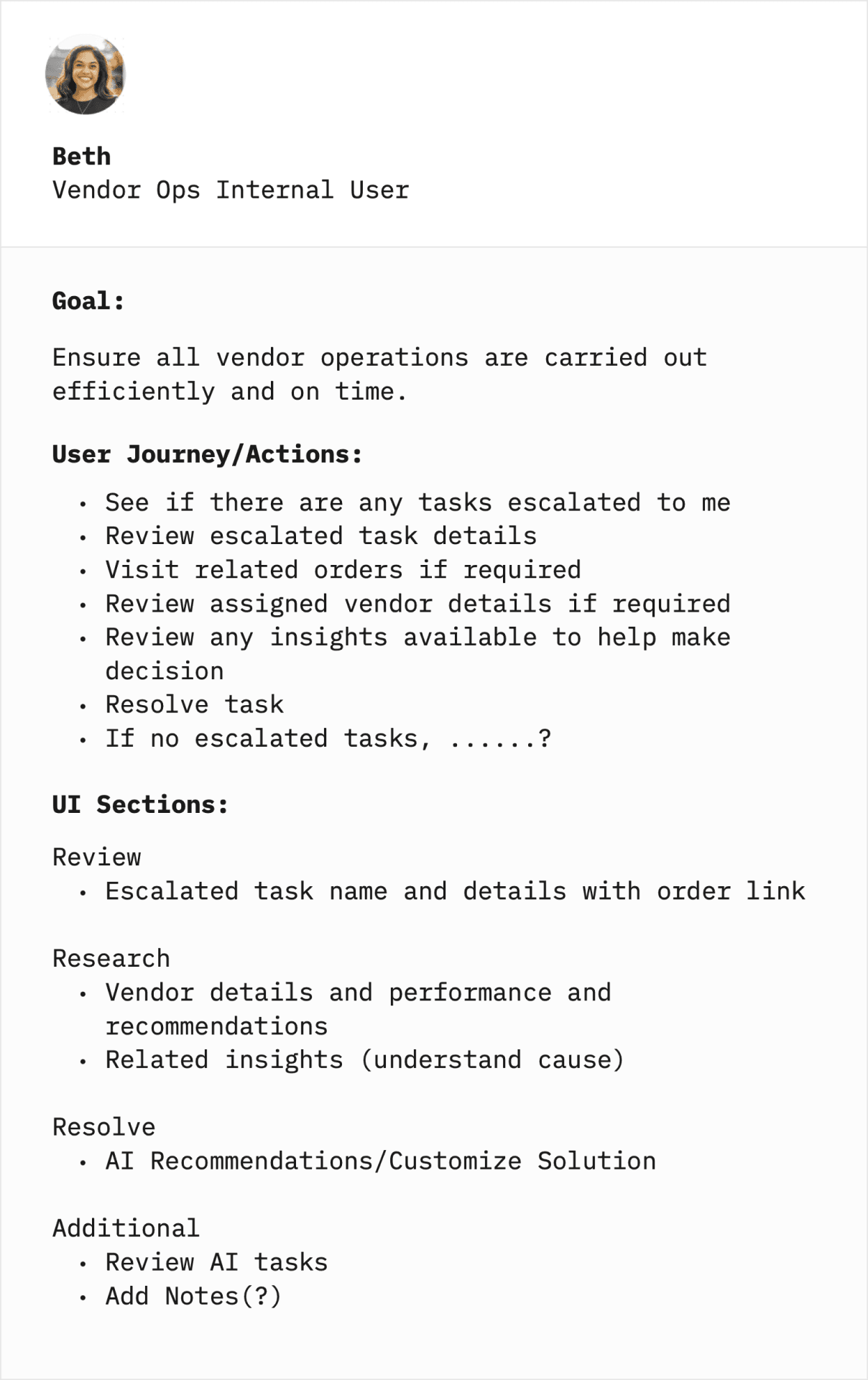
Personas + User Scenarios
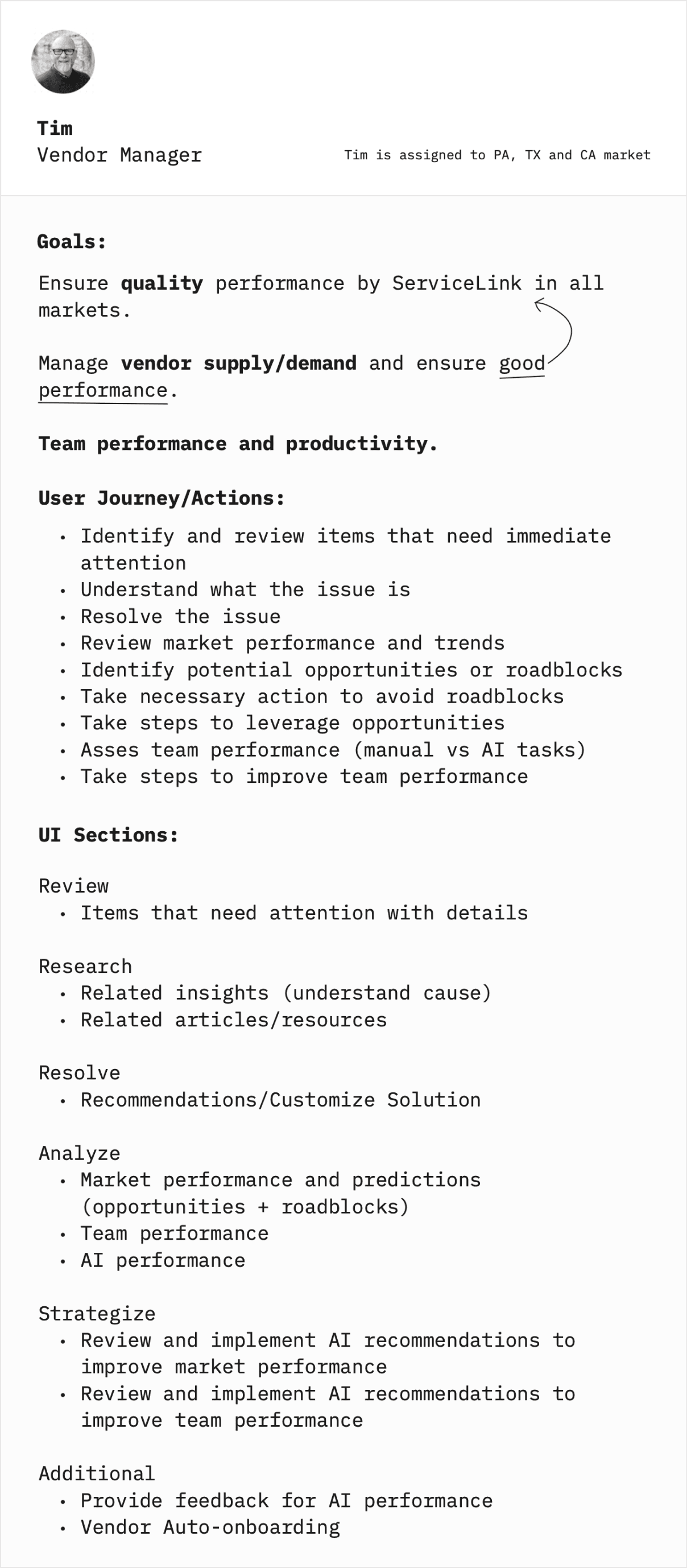
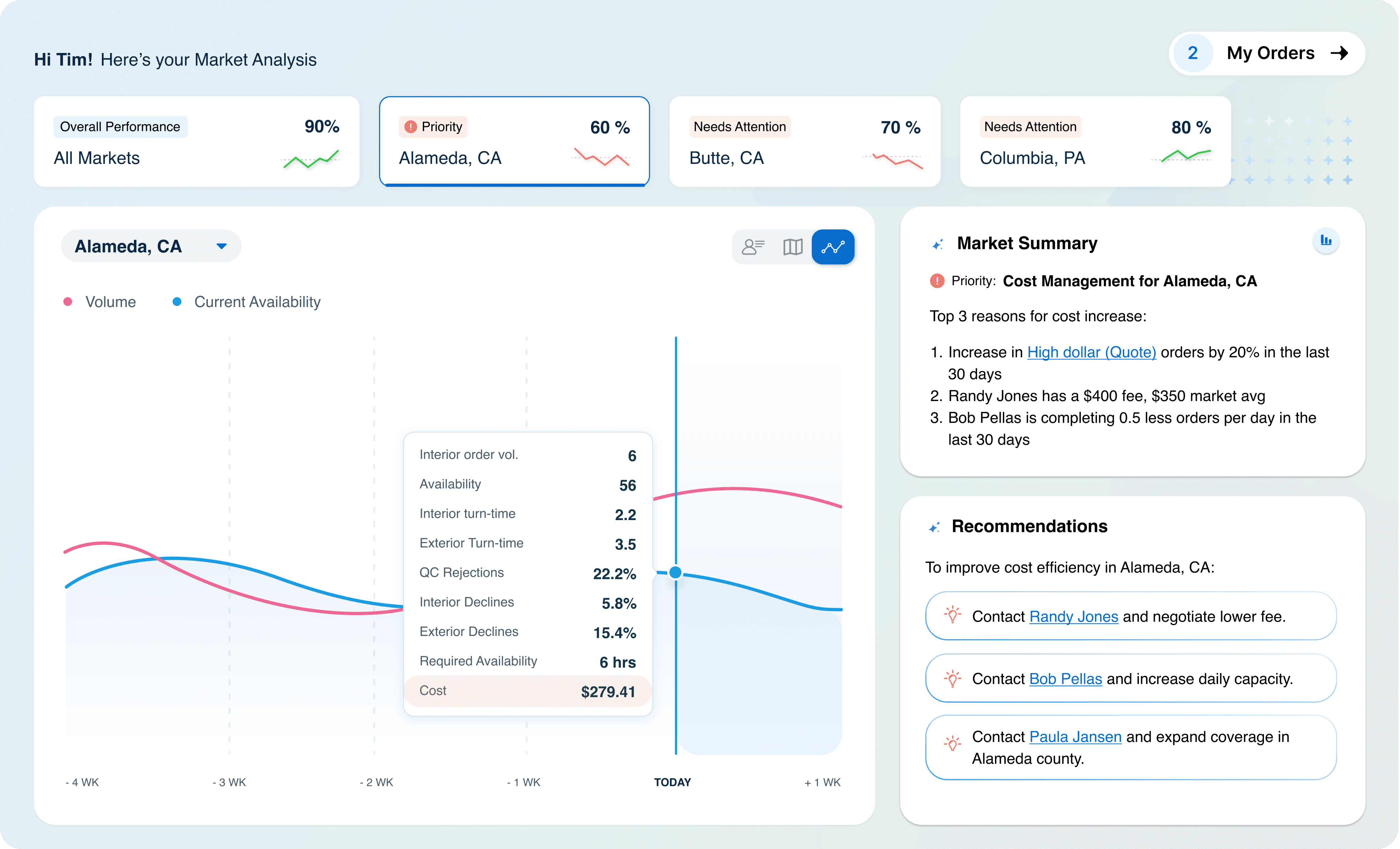
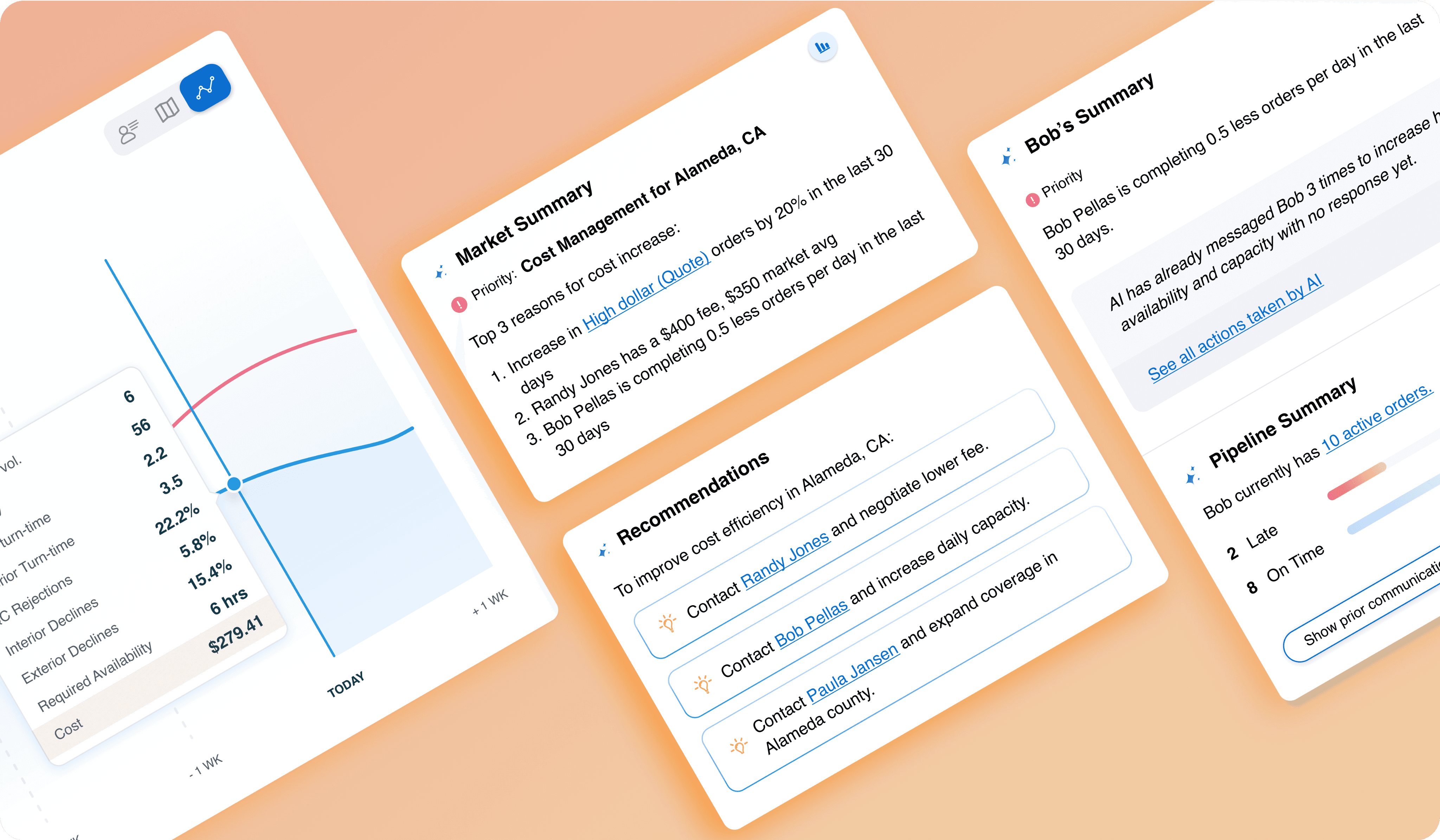
Vendor Manager, Tim is responsible for managing market and vendor performance in {___}, {___} and {___} markets. He logs into the new vendor ops platform to check on market health and if there is a need to strategize. He is able to view quickly his best performing markets as well as those that are performing poorly. He is able to investigate certain factors (turn time, cost, vendor availability and capacity and quality) to understand why some markets are performing poorly. AI is showing Tim that a cost increase in (_) market is his highest priority. AI is able to educate him further on what led to the cost increase and provide suggestions for actions he could take to remediate this. One of AI's recommendations is to contact vendor, Bob Pellas and increase his daily capacity as he has been completing 0.5 less orders per day in the last 30 days. AI has already messaged Bob 3 times to increase his availability and capacity with no response yet. AI provides Tim with a summary of important actions/history with Bob including his performance and cost. AI prompts him to review Bob's performance by clients and products so he is better informed and confident in implementing this solution. After investigating the factors, understanding the root cause and researching the AI solution, Tim proceeds with contacting Bob as a first step towards improving cost efficiency in {___} market.
Iteration 1
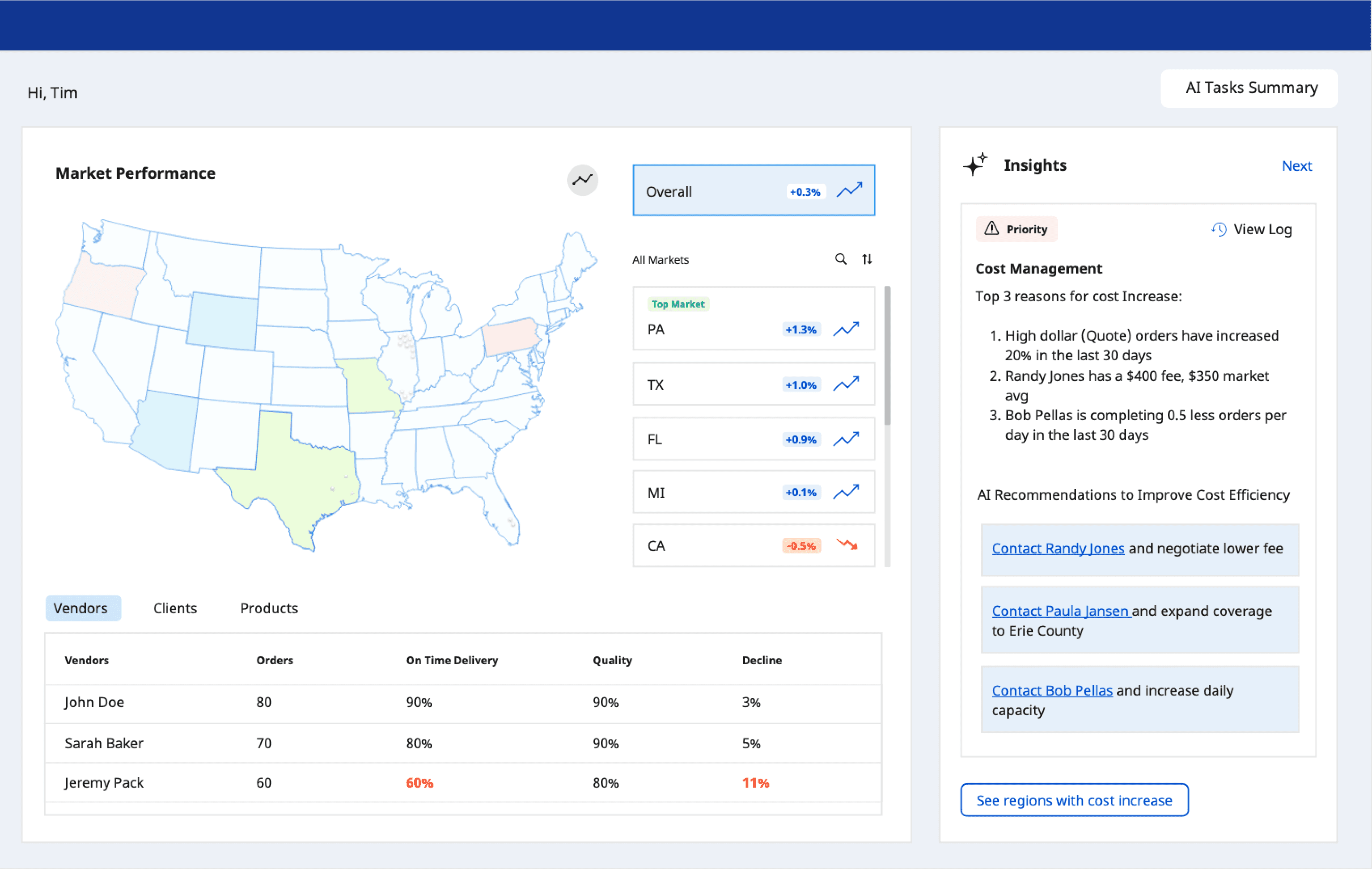
Iteration 2
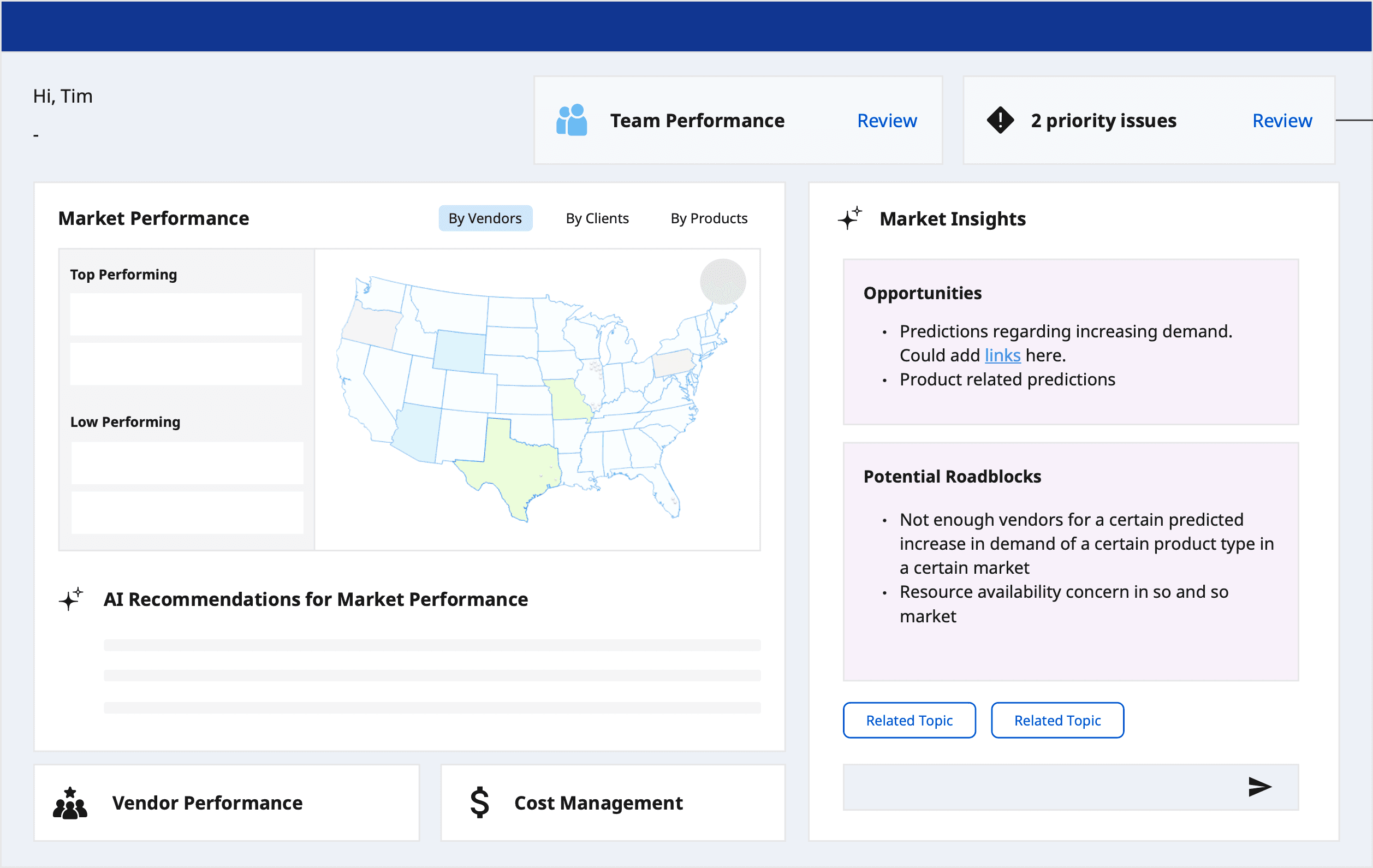
Iteration 3
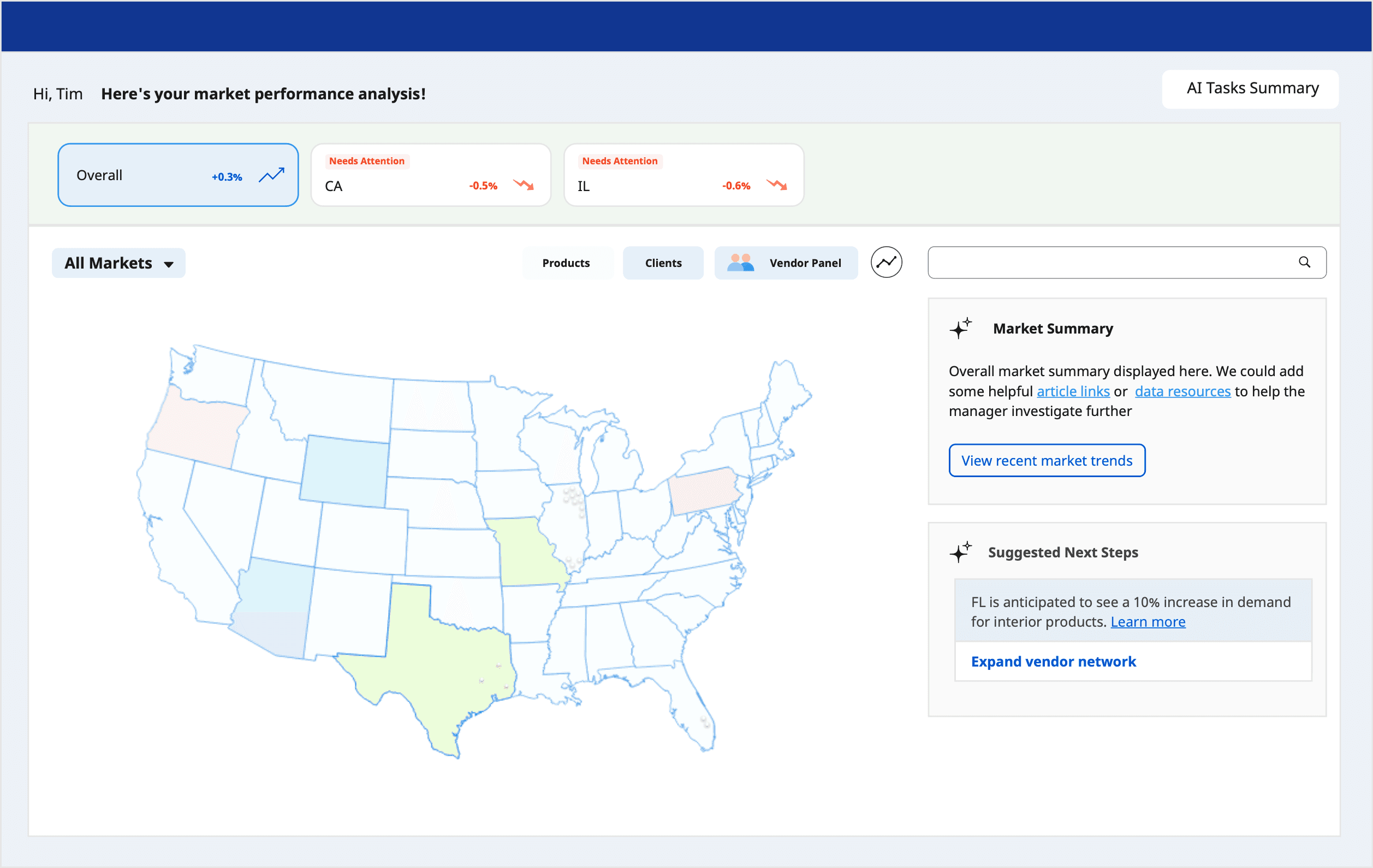
AI-driven, context-sensitive insights and recommendations to help vendor managers understand the root causes of performance issues and take informed actions.
AI provides deeper insights, making complex data more actionable and allowing managers to focus on strategic, high-impact decisions.
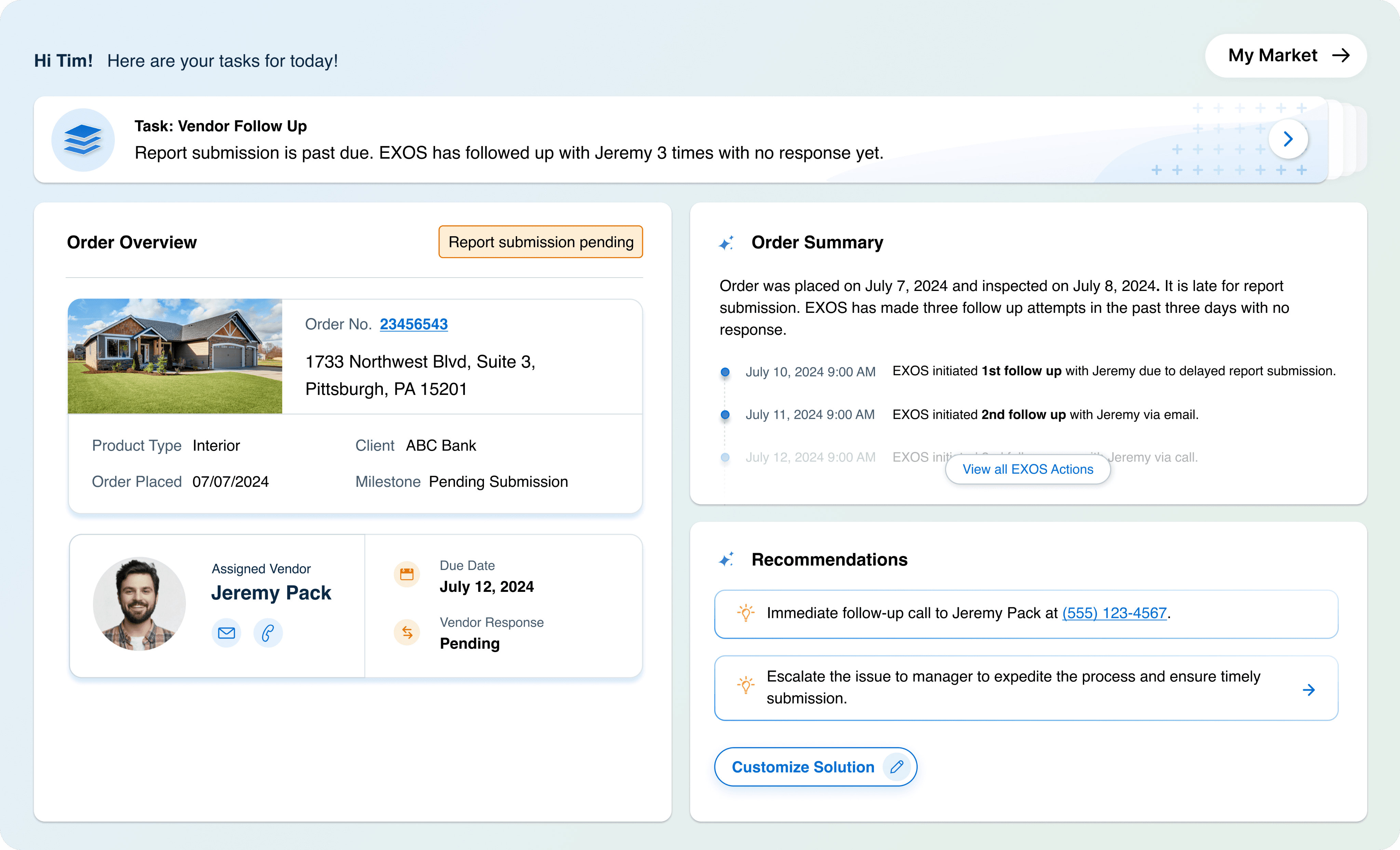
Flexible dashboard allowing users to switch between high-level market views, daily tasks and detailed vendor-specific insights.
This flexibility enables managers to maintain a comprehensive overview while still having the ability to dive deep into specifics, ensuring informed and balanced decision-making.